
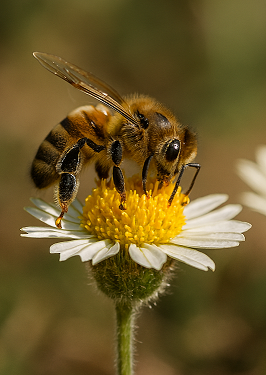
World Bee Day is observed on May 20 to raise awareness about the importance of these pollinators, the threats they face, and the benefits they bring to the entire planet, including humanity and the environment.
Currently, the number of bees, pollinators, and many other insects is declining. World Bee Day provides an opportunity for everyone—governments, organizations, civil society, and citizens—to promote actions that protect and assist pollinators and their habitats, increase their abundance and diversity, and support the sustainable development of beekeeping.
The Vital Role of Bees
Bees are the hardest-working animals on Earth, and their work benefits people, the environment, and nature. By carrying pollen from one flower to another, they ensure a wide variety of fruits, vegetables, and seeds and help produce higher-quality crops, thereby contributing to food security and nutrition.
Bees and other pollinators, such as butterflies, hummingbirds, and bats, enable the reproduction of many plants, including food crops. They are indispensable for the conservation of biodiversity; they alert us to environmental risks by indicating the health of local ecosystems.
Bee Products That Are Good for Our Health
Bees not only help the planet by pollinating plants, but through their work they also provide humans with various products that offer many health benefits. Here are some of them:
- Honey is the best-known bee product and offers numerous health benefits. It is energizing and invigorating, as well as having antiseptic and healing properties. It aids digestion and relieves cold symptoms.
- Royal jelly. This nectar is consumed only by queen bees in the hive, hence its excellent health properties. It helps improve blood circulation, has vasodilatory effects, and helps control cholesterol and blood glucose levels.
- It has anti-inflammatory and analgesic properties. It is also ideal for people suffering from fatigue and asthenia. When you feel tired, pollen helps restore your energy.
- Because it has analgesic and antibacterial properties, it is used to relieve colds and sore throats. Numerous studies support its use for respiratory and cardiovascular conditions.
- It is a highly nourishing product for the skin and hair, which is why it is included in beauty masks, offering emollient and anti-inflammatory properties. It is also used for natural hair removal.
A Partnership That Sustains Us All
According to the Food and Agriculture Organization of the United Nations, this year’s theme for World Bee Day is “Bee together for people and the planet. A partnership that sustains us all,” which aims to highlight the strong and enduring partnership between humans and bees.
For millennia, bees and people have shared a close and evolving connection, shaped by the way communities around the world have depended on bees for food and livelihoods, so that these insects have often become part of their cultural identity. From honey gathering to a wide variety of beekeeping systems, this relationship has continually adapted to different environments, technologies, and sociocultural needs.