The World Day Against Trafficking in Persons is observed every July 30. It was established by the United Nations General Assembly in 2013 to raise awareness about this serious human rights violation and to protect victims of modern slavery. On this important day, we at 3Love Inc. want to shine a light on the risks currently facing Venezuela’s children.
Earthquakes in Venezuela: Children Are at the Center of the Crisis
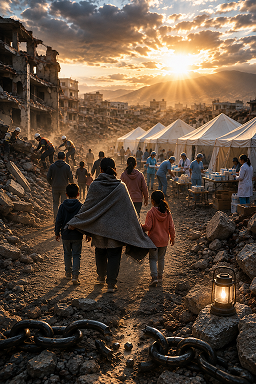
On June 24, 2026, two powerful earthquakes struck north-central Venezuela less than a minute apart. The quakes, measuring 7.2 and 7.5 on the Richter scale, affected communities in Caracas and several surrounding states. One month after the tragedy, the official death toll has risen to 5,546.
Children are among the most vulnerable people in the aftermath of any large-scale disaster. In Venezuela, UNICEF estimates that 3.9 million children live in areas affected by the earthquakes. Children face injuries, distress, family separation, displacement, and disruptions to health, education, safe drinking water, and protection services.
Some children have lost their homes. Others are sleeping outdoors or in informal camps. Some are in a state of shock. Others may not know where their parents or caregivers are. Some schools have been damaged, while those that have not are being used as temporary shelters for displaced families.
When schools close, children become less visible. When families are displaced, children may fall outside the usual systems that protect them. When parents are injured, missing, or searching for family members, children may be left in the care of people they do not know well. None of this means that trafficking will automatically occur. But it does mean that the conditions traffickers exploit can arise quickly.
Children need safe spaces, help locating their families, mental health support, clean water, food, medical care, and adults whose responsibility it is to look out for them. The response should not be to treat children as just another segment of the population. They need specific protection from the very beginning.
Why Displacement Creates a Risk of Human Trafficking
Human trafficking often begins with vulnerability. It begins when someone runs out of options. A trafficker may offer a job, a trip, a place to sleep, a route to escape danger, a loan, food, immigration assistance, or protection. For someone who is hungry, displaced, grieving, or desperate, that offer may seem like a chance for survival.
After an earthquake, warning signs can appear quickly. People may be sleeping on the streets or in informal shelters. Families may not have access to cash. Young people may be looking for work. Children may be separated from their caregivers. Women and girls may have less privacy and security. Documents may be buried under the rubble. The police, social services, and health care systems may be overwhelmed. Criminal groups may know that people are too exhausted to ask questions.
Trafficking can take many forms in these circumstances. It may include sexual exploitation, forced labor, forced begging, domestic servitude, child exploitation, recruitment for criminal activities, or debt bondage. It may involve cross-border movement, but not necessarily. A person can be a victim of trafficking within their own country, within their own city, or even within the same community where the disaster occurred.
The humanitarian response must include measures to protect children
As the organization Plan International has warned, the earthquakes that struck Venezuela on June 24 have left children increasingly vulnerable to trafficking, sexual exploitation, violence, and other forms of abuse, while families try to recover from the devastation.
To make matters worse, in Latin America it is common for children to be recruited through social media, and during emergencies—when children are more connected online and caregivers are focused on rebuilding their lives and meeting other basic needs—less attention is paid to the content children consume, which increases their risk of exposure to harmful content.
Family separation is one of the most significant protection risks following a disaster. When caregivers have died, are hospitalized, or contact with children is lost during evacuation, children may be left without the care and protection they need. Children who are alone, or whose family support networks have been disrupted, face a greater risk of trafficking and sexual exploitation.
Adolescents are more vulnerable to child labor, trafficking for sexual exploitation, and recruitment by criminal groups—through coercion or false promises presented as a way to meet their needs.
As Plan International and other organizations have pointed out, the humanitarian response in Venezuela must include measures to protect children: family tracing and reunification processes in coordination with the relevant authorities, strengthened oversight of shelters and collective housing sites, and accessible reporting mechanisms tailored to children.