
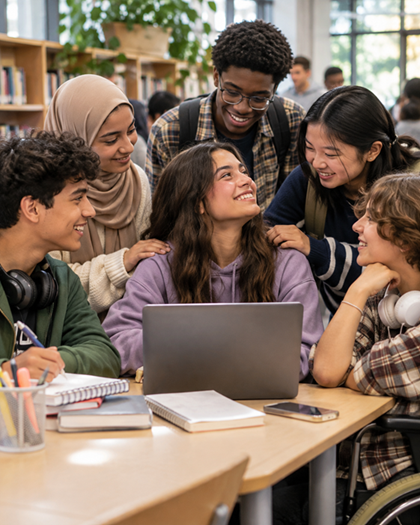
The International Day Against Violence and Bullying in Schools, including Cyberbullying, is observed on the first Thursday of November each year at the initiative of UNESCO, with the aim of raising awareness about the negative impact that bullying and school violence have on the mental health, well-being, and academic performance of children and adolescents, as well as promoting safe educational environments.
How can we harness the transformative power of education to eradicate violence?
Education has the power not only to prevent violence but also to transform societies by fostering safe, inclusive, and supportive environments.
To harness the transformative potential of education, a holistic approach is needed in which violence prevention is incorporated into all aspects of education—from policies and teacher training to curriculum design and reporting mechanisms. Fostering safe learning environments is essential for students to thrive academically, emotionally, and socially.
A key framework driving this change is UNESCO’s Recommendation on Education for Peace, Human Rights, and Sustainable Development. It emphasizes that education systems must actively promote peace and human rights, recognizing that a safe and inclusive school environment is not merely a goal but a fundamental part of the learning experience.
To make this a reality, UNESCO offers the following recommendations for education systems:
- Adopt clear policies against violence: Schools need robust policies that address all forms of violence, including bullying, corporal punishment, and online abuse. These policies must be implemented in all schools, with strong accountability mechanisms to ensure compliance and consequences for violations.
- Train teachers to prevent violence: Teachers are on the front lines of violence prevention and need ongoing training in positive discipline, gender-sensitive teaching, and conflict resolution. Equipping teachers with social-emotional learning strategies will help foster a positive school climate in which students develop empathy, emotional intelligence, and nonviolent communication.
- Empower students as agents of change: Students must actively participate in creating safer schools. Peer-led programs, student councils, and anti-bullying campaigns give students a voice and enable them to drive positive change. Their participation in decision-making processes makes them co-creators of inclusive learning environments.
- Build partnerships with communities, governments, and the private sector: Collaboration is key. Governments must align education with broader child protection systems, while technology companies can help make digital spaces safer. Communities, including parents, must participate in preventing violence, ensuring that efforts extend beyond the school setting.
- Incorporate skills and knowledge to prevent violence: Integrating social and emotional learning (SEL) into the curriculum helps students manage their emotions, build positive relationships, and resolve conflicts peacefully. Curricula should also include specific content on how to stay safe, identify violence, seek help, and challenge harmful gender norms that drive and normalize violence.
- Allocate sufficient resources: Preventing violence requires investment. Governments and education authorities must allocate resources for teacher training, safe infrastructure, mental health services, and reporting systems in schools. Long-term funding is crucial to sustaining these efforts.
- Monitor, evaluate, and ensure accountability: Schools need robust systems to track the effectiveness of violence prevention programs. Collecting disaggregated data helps identify gaps and ensures that interventions address the needs of every student, including the most vulnerable. Regular monitoring ensures continuous improvement and accountability.
By working together—students, teachers, policymakers, communities, and the private sector—we can all contribute to creating schools and digital learning spaces where everyone feels safe, respected, and empowered to learn and thrive.
By: Juan Carlos Ugarelli.