
World Animal Day is observed on October 4, with the goal of halting the extinction of many species and promoting their care and protection.
Top Endangered Species in 2026
According to National Geographic Spain, there are more than 7.7 million animal species on Earth, and more than 20% are in danger of extinction. Some of the strangest animals on our planet are teetering on the brink of extinction.
The International Union for Conservation of Nature (IUCN) is the international organization dedicated to the preservation of natural resources. In 1964, it established the Red List of Threatened Species, which classifies species into nine categories and is updated based on the status of each population:
- Extinct
- Extinct in the Wild
- Critically Endangered
- Endangered
- Vulnerable
- Near Threatened
- Least Concern
- Data Deficient
- Not Evaluated
Some of the species currently considered threatened are:
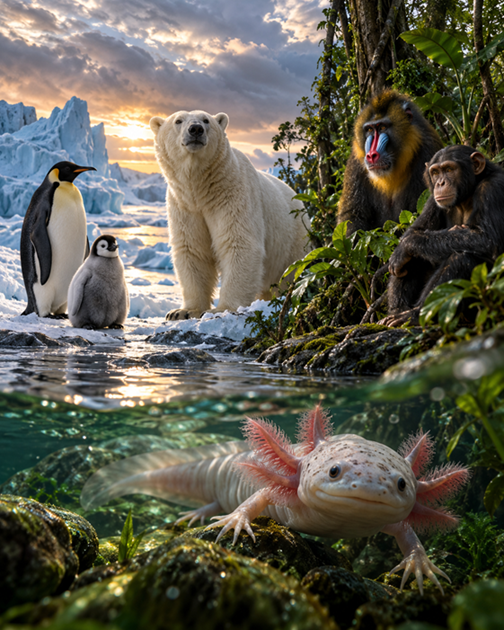
- Emperor penguin. As Antarctic ice shrinks due to climate change, the emperor penguin is increasingly threatened. In 2026, the IUCN raised its risk status to “endangered,” and the global population is projected to be halved by 2080. In recent years, it has become common in various colonies for none of the chicks to survive.
- Antarctic sea lion. The situation for Antarctic sea lions is similar. The IUCN has also reclassified them as “endangered,” but the impact of climate change is different. In their case, it is due to the decline in krill. Between 1995 and 2025, their population fell from 2,180,000 to less than one million.
- It is critically endangered. The Aztecs revered axolotl meat and caught these creatures from the vast network of canals and lakes that sustained their communities in central Mexico. Today, only a fraction of this aquatic system remains, and it is being polluted by fertilizers, pesticides, sewage, and trash from Mexico City. This animal has the ability to regrow limbs, bones, and organs that have been damaged or severed. They are a thousand times more resistant to cancer than mammals. If they survive modern threats long enough for us to understand their immune cells, we could make tremendous advances in numerous medical therapies.
- Its status is vulnerable. With a troop of 1,300 individuals once recorded in the forests of Gabon, mandrills are believed to form the largest social groups of non-human primates. With their striking faces and eyes, they have evolved to display the most spectacular coloration of any mammal species, the intensity of which indicates their social and sexual status. Unfortunately, mandrill meat is considered a delicacy in West Africa and is part of a growing trade, with tons of bushmeat smuggled into Western Europe every day. Because mandrills live in such large groups, a significant portion of their population can fall victim to this booming trade in a single hunt.
- Polar bears. They are classified as vulnerable. Polar bears depend on sea ice to catch their prey. They pounce on seals as they surface through their breathing holes and stalk them while they sunbathe on the ice, but the ice is melting as our climate warms. The thirteen winters following 2003 saw the thirteen smallest sea ice extents ever recorded by satellites. Hunting seasons are getting shorter, and for every week of ice lost during Arctic winters, polar bears lose about 7 kg of fat.
- Their status is “endangered.” Only 10% of Madagascar’s historic forests remain, which support these critically endangered lemurs. With a great love for nectar, lemurs are believed to be the world’s largest pollinators. Unlike most primates, they give birth to large litters, so they thrive in captivity, where survival rates are high. But because they have been bred from a very small gene pool, subsequent reintroductions pose many complications. Their conservation will be achieved when humanity leaves them in peace in a pristine rainforest.
- Common chimpanzee. Its status is “endangered.” Deforestation has occurred at a slower rate in western Central Africa compared to other tropical regions abroad. The common chimpanzee’s habitat has remained relatively intact; nevertheless, about three-quarters of its population has been lost over the past century. This is because they are hunted for their meat, which is consumed locally and also smuggled abroad. Agriculture, logging, oil extraction, mining, and road construction cut through the forests and fragment their cohesive communities. They are also susceptible to outbreaks of anthrax, Ebola, and respiratory diseases.
By: Juan Carlos Ugarelli.