World Ecology Day is celebrated every November 1. This date is a great opportunity to raise awareness and educate people about the need to protect the environment and promote eco-friendly practices that contribute to the planet’s biodiversity.
What is ecology?
As a branch of biology, ecology is dedicated to investigating the interactions between organisms and their habitat. It focuses on understanding how species coexist and how their distribution and abundance are determined by biological and physical factors. Through this science, we can learn how living things depend on their environment to survive and thrive.
We can think of ecology as nature’s “detective,” investigating both living organisms (plants, animals, microorganisms) and non-living factors (climate, soil, water) that shape their environment.
Ecology is organized into different levels:
- Individual study: Examines how each organism interacts with its immediate environment.
- Population study: Analyzes how individuals of the same species coexist in a given area.
- Community study: Explores how different populations interact within the same region.
- Ecosystem study: Investigates the relationships between communities and their physical environment.
- Study of the biosphere: Examines how all living things on Earth interact with one another and with the planet as a whole.
10 Reasons Why Ecology Is Important
According to the Discapnet website, these are the top 10 reasons why ecology is important for people and the environment.
- Ecosystem conservation: It helps us understand the relationships between living organisms and their environment, which is key to ecosystem conservation.
- Ecological balance: It allows us to maintain the balance of ecosystems, preventing harmful imbalances.
- Sustainable resource management: It provides tools for managing natural resources sustainably.
- Prevention of environmental impact: It allows us to anticipate and mitigate the impact of human activities on nature.
- Human health: Ecology helps us understand how changes in the environment can affect our health.
- Biodiversity: Ecology is essential for protecting biodiversity and ecosystem services.
- Climate Change: It helps us address climate change by studying how ecosystems interact with the atmosphere.
- Environmental education: It provides the knowledge necessary for environmental education and the promotion of sustainable practices.
- Adaptation and resilience: It helps us understand how organisms and ecosystems adapt to natural and human-induced changes.
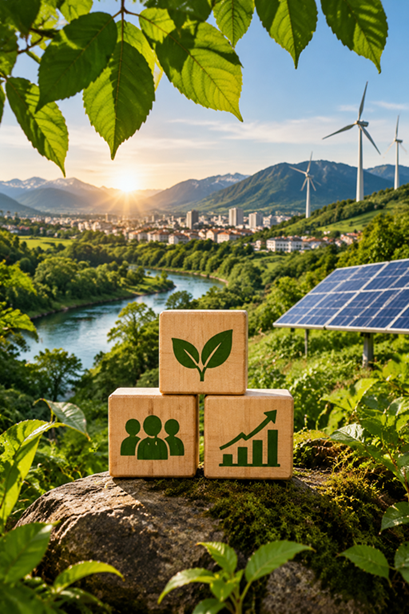
- Sustainable development: It guides us toward development that takes into account the balance between the environment, society, and the economy.
By: Juan Carlos Ugarelli.