
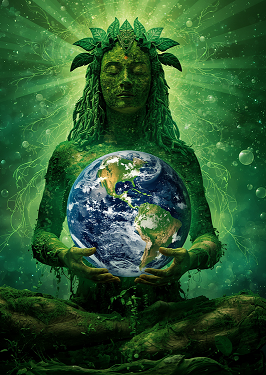
Mother Earth Day is celebrated on April 22 with the aim of raising awareness about environmental protection, biodiversity, and climate change, as well as recognizing the planet and its ecosystems as the shared home that sustains humanity.
Caring for Our Mother Earth
Mother Earth is calling on us to take action. The oceans are filling with plastic and becoming more acidic. Extreme heat, wildfires, floods, and other climate events have affected millions of people.
Climate change, human-induced changes to nature, and activities that threaten biodiversity—such as deforestation, land-use change, intensive agricultural and livestock production, and the growing illegal wildlife trade—can accelerate the rate at which our planet is being destroyed.
For this reason, we need to restore our planet’s ecosystems, as they sustain all forms of life on Earth. The health of our planet and its inhabitants depends directly on the health of our ecosystems. Restoring those that are damaged will help end poverty, combat climate change, and prevent mass extinction.
On this International Mother Earth Day, it is important to remember the importance of achieving a more sustainable economy that works for both people and the planet. Let us promote harmony with nature and the Earth.
Three facts to help us better understand climate change
- Climate change is real
According to the United Nations, climate change affects every region on Earth. Changes in rainfall patterns, rising sea levels, melting glaciers, warming oceans, and more frequent and intense extreme weather events are just some of the changes already affecting millions of people.
Climate change can affect our health, our ability to grow food, our homes, our safety, and our jobs. Some people are more vulnerable to climate impacts, such as those living in small island developing states. Threats like sea-level rise and saltwater intrusion have advanced to the point where entire communities have had to relocate. The number of people displaced by climate change is expected to rise in the future.
- Climate change is a serious threat to people’s health
The effects of climate change are harming people’s health (air pollution, disease, extreme weather events, forced displacement, food insecurity, and mental health risks) and will worsen with every fraction of a degree of global warming.
The main cause of climate change—the burning of coal, oil, and gas—also causes air pollution, which in turn can lead to respiratory diseases, strokes, and heart attacks. Currently, more than 8.7 million people die each year due to air pollution.
Replacing fossil fuel-fired power plants with renewable energy sources, such as wind or solar farms, will greatly benefit people’s health. Wind turbines and solar panels do not release emissions that pollute the air or contribute to global warming.
- Renewable energy will soon supply most of the world’s electricity
Every country has renewable energy sources, such as hydro, geothermal, wind, and solar, whose potential is not yet being fully harnessed.
Currently, nearly 30% of the world’s electricity comes from renewable energy.
By 2050, 90% of the world’s electricity can and must come from renewable energy.
Over the next five years, the world will add as much renewable energy as it did over the past 20 years.
In many regions, renewables are the fastest-growing source of energy.