
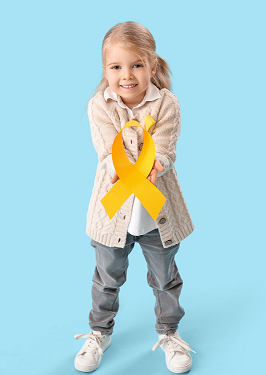
International Childhood Cancer Day is commemorated on February 15 with the aim of raising awareness about this disease, improving early detection, and supporting children and adolescents who suffer from it. Established in 2002, this day seeks to promote access to dignified treatment and hope for a cure, using the gold ribbon as its symbol.
Childhood cancer can occur suddenly, without early symptoms, and has a high cure rate if detected early. The most common childhood cancer is leukemia. Other types of cancer that affect children include brain tumors, lymphoma, and soft tissue sarcoma.
Childhood cancer in the Andean subregion
According to the Pan American Health Organization (PAHO), childhood cancer is a public health problem due to the high burden of the disease and the disparity in survival rates between low-income and high-income countries. In the Andean subregion (comprising Bolivia, Chile, Colombia, Ecuador, Peru, and Venezuela), childhood cancer is the leading cause of death from noncommunicable diseases, with a higher mortality rate than in other countries in the Region of the Americas.
Among the causes associated with potentially preventable mortality are late diagnosis, abandonment of treatment, malnutrition, toxicity from infections, and inadequate access to effective treatments, among others.
Three fundamental pillars for promoting timely diagnosis
The Cooperation Among Countries for Health Development (CCHD) project on childhood cancer aims to promote early diagnosis of childhood cancer in the six Andean countries based on three fundamental pillars: training, communication, and collaboration, with evidence-based strategies, policies, and activities established in these countries and led by the ministries of health with the support of PAHO and ORAS-CONHU.
- Training: Strengthen the skills of health team members, health promoters, and managers in the early diagnosis of childhood cancer.
- Communication: Raise awareness among countries about the early identification of symptoms and signs of childhood cancer.
- Collaboration: Promoting the exchange of experiences and lessons learned among Andean countries is essential for developing and implementing strategic practices.
Symptoms that should serve as a warning sign
Early detection of this disease increases the chances of cure, so it is essential that family and healthcare personnel close to the child be alert to warning signs and symptoms that could indicate a possible case of cancer. Some of these are:
- Weight loss
- Night sweats or excessive sweating
- Loss of appetite
- Bone and joint pain
- Progressive paleness, fatigue, tiredness, or apathy without apparent cause
- Persistent or recurrent fever (lasting several days and not responding to common treatments)
- Frequent bleeding from the nose or gums when brushing teeth
- Red or purple spots on the skin (petechiae)
- Bruises with no apparent cause
- Irregular growth on the abdomen
- Lumps (lymph nodes) on the neck, armpits, or groin, especially if they are hard, large nodules with no signs of infection that do not go away with anti-inflammatory medication
- Abnormal growth anywhere on the body
- White reflex in the eye (pupil)
- Deviation of gaze or increase in volume in one or both eyes
- Persistent headache, which worsens over time and does not subside with medication
- Behavioral changes or neurological alterations (dizziness, involuntary movements, seizures, tingling, loss of balance, walking disturbances, and/or loss of sensation).